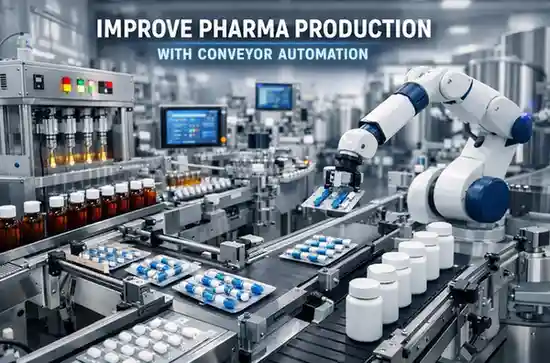
Improve Pharma Production with Conveyor Automation
Improve Pharma Production with Conveyor Automation
The pharmaceutical industry is undergoing a massive transformation driven by automation, precision, and compliance requirements. One of the most impactful innovations in this space is conveyor automation, which is revolutionizing how pharmaceutical products are manufactured, packaged, and delivered.
Modern pharmaceutical conveyor systems are no longer just material handling tools—they are intelligent, integrated solutions designed to enhance pharma production efficiency, ensure compliance, and significantly reduce operational costs.
This in-depth guide explores how conveyor automation improves pharmaceutical manufacturing, the technologies involved, cost considerations, ROI potential, and future trends shaping the industry.
What is Conveyor Automation in Pharma?
Conveyor automation refers to the use of advanced conveyor systems integrated with sensors, robotics, and control systems to move materials, products, and packaging efficiently through different stages of pharmaceutical production.
These systems are designed to meet strict GMP (Good Manufacturing Practice) requirements, ensuring product safety, contamination control, and traceability.
Why Conveyor Automation is Critical for Pharma Production
Pharmaceutical manufacturing demands high precision, hygiene, and efficiency. Manual handling increases the risk of contamination, errors, and inefficiencies. Conveyor automation addresses these challenges by:
- Reducing human intervention
- Improving production speed
- Enhancing product consistency
- Ensuring regulatory compliance
- Minimizing operational costs
Types of Conveyor Systems Used in Pharma
1. Belt Conveyors
Widely used for transporting packaged products and raw materials across production lines.
2. Roller Conveyors
Ideal for handling heavy loads such as bulk containers and cartons.
3. Chain Conveyors
Used for high-speed production lines requiring durability and precision.
4. Modular Conveyors
Flexible systems that can be customized for various production requirements.
5. Stainless Steel Hygienic Conveyors
Designed specifically for cleanroom environments and sterile production areas.
Key Features of Modern Pharma Conveyor Systems
- Automation with PLC and SCADA integration
- Real-time monitoring and control
- Cleanroom-compatible designs
- Anti-contamination surfaces
- High-speed product handling
- Integration with packaging and filling machines
Cost of Conveyor Automation Systems
The cost of industrial conveyor systems varies based on complexity, automation level, and production capacity.
| System Type | Price Range (USD) | Application |
|---|---|---|
| Basic Belt Conveyor | $5,000 - $20,000 | Small-scale production |
| Automated Conveyor Line | $20,000 - $100,000 | Medium production facilities |
| Fully Integrated Smart Conveyor System | $100,000 - $500,000+ | Large pharma plants |
How Conveyor Automation Improves Pharma Production Efficiency
1. Increased Throughput
Automated conveyors enable continuous production flow, significantly increasing output without compromising quality.
2. Reduced Labor Costs
Automation minimizes manual handling, reducing workforce requirements and associated costs.
3. Enhanced Product Quality
Consistent handling reduces damage, contamination, and errors.
4. Improved Workflow Optimization
Integrated systems streamline processes from raw material handling to packaging.
5. Real-Time Monitoring
Advanced systems provide real-time data for better decision-making and process optimization.
Comparison: Manual vs Automated Conveyor Systems
| Parameter | Manual Handling | Automated Conveyor |
|---|---|---|
| Efficiency | Low | High |
| Accuracy | Moderate | Very High |
| Labor Cost | High | Low |
| Compliance | Risky | Fully Compliant |
ROI of Conveyor Automation in Pharma
Investing in conveyor automation offers substantial ROI through efficiency gains and cost savings.
| Metric | Before Automation | After Automation |
|---|---|---|
| Production Output | 1,000 Units/day | 1,800 Units/day |
| Defect Rate | 8% | 2% |
| Operational Cost | High | Reduced |
Integration with Smart Manufacturing
Modern conveyor systems integrate seamlessly with smart factory technologies, enabling:
- IoT-based monitoring
- AI-driven analytics
- Predictive maintenance
- Cloud-based data management
Applications in Pharmaceutical Manufacturing
Tablet and Capsule Production
Efficient transport between granulation, compression, and coating processes.
Liquid Filling Lines
Integration with filling and sealing machines for seamless operations.
Packaging and Labeling
Automated movement through packaging and labeling stations.
Cleanroom Operations
Ensures contamination-free handling in sterile environments.
Compliance and Regulatory Standards
Pharmaceutical conveyor systems must comply with global regulations such as:
- GMP (Good Manufacturing Practice)
- FDA guidelines
- ISO standards
Compliance ensures product safety, quality, and market approval.
Future Trends in Conveyor Automation
- AI-powered conveyor systems
- Robotics integration
- Digital twin technology
- Energy-efficient conveyor designs
- Fully autonomous production lines
How to Choose the Right Conveyor System
- Assess production requirements
- Evaluate automation level
- Ensure compliance with regulations
- Consider scalability
- Analyze total cost of ownership
Expert Tips:
- Invest in high-quality materials for durability
- Choose systems with advanced monitoring features
- Partner with reliable suppliers
Challenges and Solutions
Initial Investment Cost
Solution: Focus on long-term ROI and efficiency gains.
Integration Complexity
Solution: Work with experienced automation providers.
Maintenance Requirements
Solution: Implement predictive maintenance systems.
Conclusion
Conveyor automation is a game-changer for pharmaceutical manufacturing, offering unmatched efficiency, precision, and compliance. By investing in advanced industrial automation tools, companies can significantly improve production output, reduce costs, and maintain high-quality standards.
As the pharmaceutical industry continues to evolve, adopting conveyor automation will be essential for staying competitive and achieving sustainable growth.
Ready to upgrade your pharma production line? Implement conveyor automation today and unlock the full potential of your manufacturing operations.