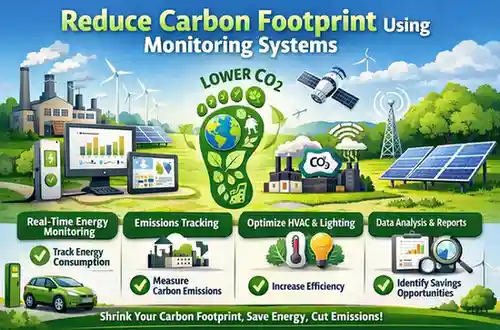
Reduce Carbon Footprint Using Monitoring Systems
Reduce Carbon Footprint Using Monitoring Systems
Reducing carbon emissions has become a strategic priority for businesses worldwide. With increasing environmental regulations and growing investor focus on sustainability, companies are turning to emission monitoring systems and green technology tools to minimize their environmental impact.
This in-depth guide explains how organizations can effectively reduce carbon footprint using advanced monitoring systems, improve ESG performance, and achieve long-term cost savings.
What Is Carbon Footprint?
A carbon footprint refers to the total amount of greenhouse gases (GHG) emitted directly or indirectly by industrial activities. These emissions primarily include carbon dioxide (CO₂), methane (CH₄), and nitrous oxide (N₂O).
Why Reducing Carbon Footprint Is Critical
- Strict global environmental regulations
- Carbon taxes and penalties
- Investor demand for ESG compliance
- Corporate sustainability commitments
- Energy cost optimization
Role of Monitoring Systems in Carbon Reduction
Emission reduction systems help businesses identify, track, and control emissions in real time. These systems provide actionable insights that allow companies to implement targeted sustainability strategies.
Types of Carbon Monitoring Systems
1. Continuous Emission Monitoring Systems (CEMS)
Provide real-time tracking of emissions from industrial stacks and processes.
2. Predictive Emission Monitoring Systems (PEMS)
Use AI algorithms to estimate emissions based on operational data.
3. IoT-Based Monitoring Systems
Utilize smart sensors and cloud platforms for real-time monitoring.
4. Carbon Tracking Software
Enables reporting, analytics, and compliance management.
How Monitoring Systems Reduce Carbon Footprint
Real-Time Data Visibility
Continuous monitoring helps identify emission sources instantly.
Energy Optimization
Systems highlight inefficiencies and enable energy-saving measures.
Process Improvement
Data-driven insights help optimize production processes.
Regulatory Compliance
Ensures adherence to environmental standards and avoids penalties.
Cost of Carbon Monitoring Systems
The cost of sustainability solutions varies based on system complexity and scale.
| System Type | Price Range (USD) | Application |
|---|---|---|
| Portable Systems | $5,000 - $25,000 | Small industries |
| PEMS | $20,000 - $100,000 | Medium industries |
| CEMS | $50,000 - $300,000+ | Large industrial plants |
Key Benefits of Carbon Monitoring Systems
1. Reduced Emissions
Helps achieve significant reduction in carbon output.
2. Lower Energy Costs
Optimizes energy consumption and reduces operational expenses.
3. Improved ESG Performance
Enhances sustainability ratings and investor confidence.
4. Regulatory Compliance
Avoids fines and ensures adherence to global standards.
5. Data-Driven Decision Making
Provides insights for continuous improvement.
Carbon Reduction Metrics
| Metric | Before Implementation | After Implementation |
|---|---|---|
| Carbon Emissions | 100% | 60% |
| Energy Efficiency | 70% | 90% |
| Operational Costs | High | Optimized |
Industries Benefiting from Carbon Monitoring
Manufacturing
Reduces emissions from production lines.
Energy Sector
Improves efficiency in power generation.
Oil & Gas
Controls emissions during extraction and refining.
Chemical Industry
Manages hazardous emissions effectively.
Integration with Smart Sustainability Systems
Modern green technology tools integrate with:
- IoT-enabled sensors
- AI-based analytics
- Cloud platforms
- Digital twin technology
Challenges in Implementation
- High initial investment
- Complex system integration
- Data accuracy requirements
- Maintenance costs
ROI of Carbon Monitoring Systems
Investing in ESG compliance equipment delivers measurable ROI through cost savings and efficiency improvements.
| Metric | Before | After |
|---|---|---|
| Energy Costs | High | Reduced |
| Penalty Costs | High | Minimal |
| ROI Period | - | 1-3 Years |
Future Trends in Carbon Reduction Technologies
- AI-driven emission control systems
- Blockchain-based ESG reporting
- Smart grid integration
- Real-time global compliance monitoring
Best Practices to Reduce Carbon Footprint
- Implement real-time monitoring systems
- Adopt energy-efficient technologies
- Optimize industrial processes
- Invest in renewable energy solutions
Expert Tips
- Start with high-impact emission sources
- Invest in scalable systems
- Leverage AI for predictive analytics
Conclusion
Reducing carbon footprint is essential for modern businesses aiming to achieve sustainability and regulatory compliance. By leveraging advanced emission reduction systems and sustainability solutions, companies can significantly lower emissions, improve efficiency, and enhance profitability.
As industries move toward greener operations, adopting carbon monitoring systems will be a key driver of long-term success and environmental responsibility.
Ready to reduce your carbon footprint? Start by implementing the right monitoring system tailored to your industrial needs.